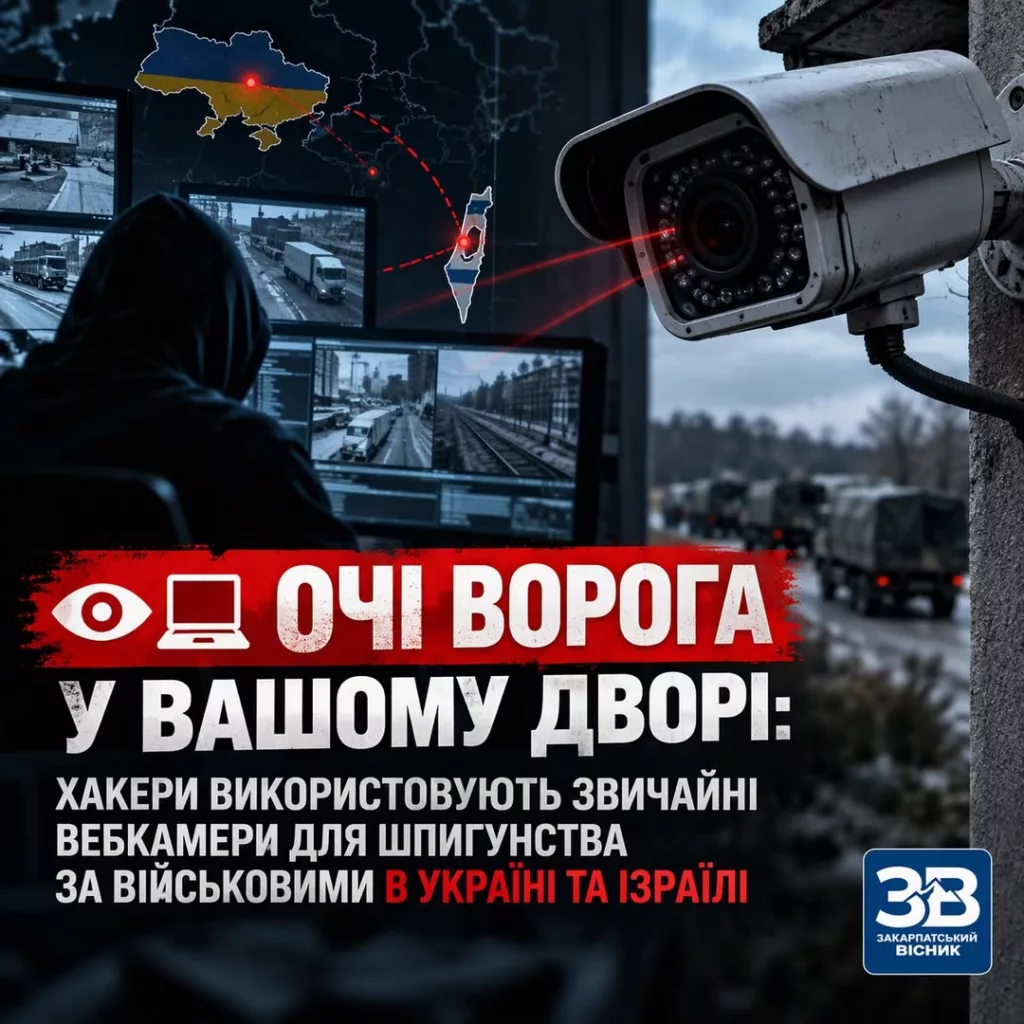
Consumer and commercial video surveillance cameras connected to the Internet are increasingly being transformed into tools for in-depth military intelligence. According to The Wall Street Journal, vulnerabilities in street-level equipment are being actively exploited in armed conflicts between Ukraine and Russia, as well as between Israel and Iran.
Analysts estimate that there are approximately 1.2 billion internet-connected cameras in operation worldwide today. A significant portion of this equipment has inadequate cybersecurity or remains set to factory defaults, making it easy prey for hostile cyber units. Compromised devices allow for tracking the movements of military convoys, the results of strikes, and the redeployment of military equipment.
International Experience and Incidents The article cites a telling example from northern Israel, where the owner of a poultry farm discovered that the interface of a Chinese-made surveillance camera had suddenly switched to Arabic. Specialists from Israel’s National Cyber Directorate determined that the device had been hacked by third parties: the camera was positioned in a strategic area near the Lebanese border, allowing it to record the maneuvers of the Israeli army. For their part, Israeli intelligence agencies had previously used Tehran’s road surveillance network to track high-ranking Iranian officials.
Espionage in the War Against Ukraine In the conflict with Ukraine, Russian military and hacker groups also systematically rely on a network of private and municipal cameras. It is reported that cybercriminals linked to Russia have hacked into surveillance systems not only in combat zones but also on highways in several European countries to map out the logistics routes for military aid to the Ukrainian Armed Forces.
In addition, analysts emphasize the growing role of artificial intelligence: automated AI algorithms are capable of analyzing massive video streams from thousands of devices in real time, identifying patterns in the movement of defense forces without the need for human operators.
Cybersecurity experts are urging owners of residential properties, businesses, and administrative buildings to review the security settings of their video surveillance cameras: regularly update firmware, set complex, unique passwords, and adjust the camera’s field of view so that the lenses do not capture critical and military infrastructure.
Source: The Wall Street Journal / UNIAN