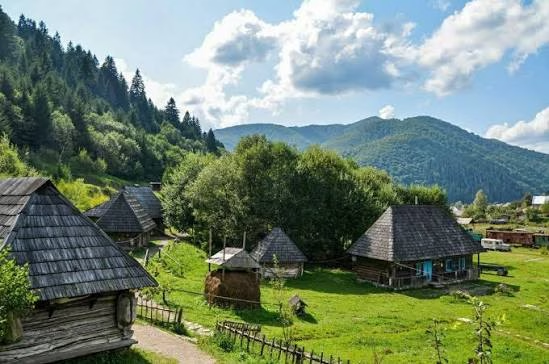
Kolochava is one of the most colorful, oldest, and most interesting villages in Ukraine, located in a picturesque valley amid the mountains of the Synevyr National Nature Park (Khust District, Zakarpattia Oblast). This unique location is often called the “village of ten museums,” as an incredible number of historical sites, ethnographic landmarks, and monuments are concentrated here within a small area.
The Village’s Historical Past and Uniqueness
Kolochava has a centuries-old history and stretches along the Kolochavka River and its tributaries for nearly 15 kilometers. Thanks to its geographical location at the junction of mountain ranges, the village has long lived according to its own traditions, preserving the authentic way of life of the highlanders.
A distinctive chapter in Kolochava’s history is that, at various times, it was part of different states (the Kingdom of Hungary, Czechoslovakia, Austria-Hungary, etc.), which left its mark on the architecture, culture, and even the lives of the local residents. The most famous native of these parts is the legendary outlaw Mykola Shugay — the Transcarpathian Robin Hood, about whom the famous Czech writer Ivan Olbracht wrote in his novel *Mykola Shugai—The Bandit*.
A Museum Phenomenon: What to See in Kolochava
Today, Kolochava has become a true open-air tourist destination. There are about a dozen unique museums on its territory:
- “Old Village” Skansen: The first rural museum of architecture and everyday life in Transcarpathia. It features examples of dwellings and farm buildings used by the inhabitants of Verkhovyna across various centuries, with recreations of the interiors of the houses, craft workshops, a school, and even an old church.
- “Kolochava Narrow-Gauge Railway” Museum: The only functioning museum in Ukraine dedicated to the history of narrow-gauge railways. Here you can see a genuine, rare steam locomotive and railcars that once ran along the region’s mountain routes.
- “Bokorash” Museum: Dedicated to the dangerous and romantic profession of the bokorash—log drivers who floated timber down mountain rivers.
- Historical and Military Exhibits: Museums chronicling the turbulent events of World War I and World War II, including the “Internationalist Soldiers” Museum, the “Czech School” Museum, and others.
- Unusual Monuments: The village features more than two dozen unique monuments dedicated to teachers, migrant workers, shepherds, peacekeepers, and even a sewing machine.
Practical Information for Tourists
- How to get there: The most convenient way to reach Kolochava is by car from Mizhhiria or Khust via picturesque mountain roads. There are also scheduled buses running here.
- Infrastructure: Green tourism is actively developing in the village: there are cozy guesthouses and kolybas where you can sample authentic Transcarpathian dishes, as well as guided tours and organized horseback or hiking excursions.
Plan your trip to Kolochava—it’s a wonderful opportunity to immerse yourself in living history, experience the spirit of the past, and enjoy the majestic landscapes of the Carpathian region!